Most "personalized" jewelry means a name spelled out in script, or an initial hanging from a chain. It's nice. It's also new — a marketing category invented in the last few decades. There's an older kind of personalization, one that was set in gold three thousand years before the word existed: a stone chosen for you, specifically, before you were even born.
What Does "Personalized" Jewelry Really Mean?
Search "personalized jewelry gift" and you'll find engraved bars, birthstone charts sorted by calendar month, and necklaces with someone's initial dangling from them. All of it is personal in a shallow sense — your name is your name, but so is everyone else born on the 14th of the month wearing the same generic "birthstone." A chart with twelve options, applied to eight billion people, isn't really personalization. It's a category with twelve boxes.
The Original Personalization: The Hoshen
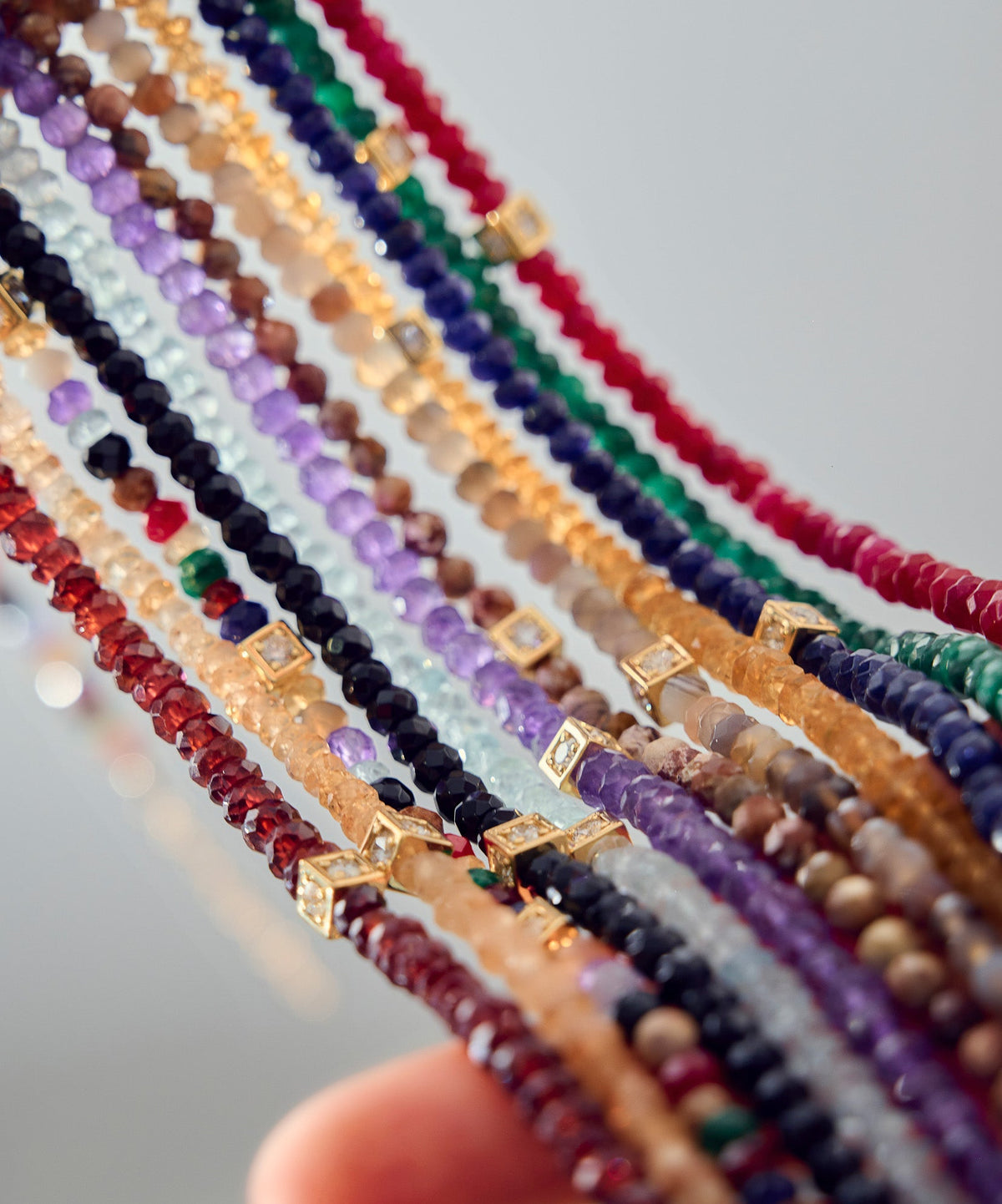
Long before "customization" was a marketing term, the Torah described a piece of jewelry built entirely around individual identity: the Hoshen, the breastplate worn by the High Priest of Israel, set with twelve gemstones — one for each of the twelve tribes, each stone engraved with that tribe's name. It wasn't decoration. It was a system for representing every distinct group of people as its own, specific stone, in the same piece of gold, at the same time. Nothing generic about it.
How We Match You to Your Tribe
We didn't simplify that idea down to a monthly chart. Your Hebrew birth date — which depends not just on the day you were born, but whether it fell before or after sunset — determines your Hebrew month, and your Hebrew month determines your tribe and your stone. Because the Hebrew calendar is lunar, that date shifts against the Gregorian calendar every year, which is exactly why so few people already know their own. Enter your birthday at hachoshenstones.com and we work it out for you — down to the one stone, out of twelve, that's actually yours.
Why Personalized Jewelry Makes the Best Gift
The research on gift-giving is consistent on one point: the gifts people remember are the ones that show someone put in the thought. An engraved initial takes thirty seconds to select. A piece matched to someone's actual tribe — their own ancient, specific identity, not a generic slot on a chart — takes a little more effort to give, and it shows. It's the difference between a gift that says "I know your name" and one that says "I know exactly who you are."
Four Reasons Every Stone Becomes Yours
- 💎 18 Karat Solid Gold — never plated, never filled
- 🔹 Natural Diamonds & Gemstones — no simulants, no lab-grown substitutes
- 🕎 Your Exact Tribe — not a generic month on a chart
- ♾️ Made to Be Handed Down — a piece with a three-thousand-year story behind it
Everything You Want to Know
Can I get a personalized piece for someone else, as a gift? Yes — just enter the recipient's birthday (and whether it fell before or after sunset) instead of your own, and we'll find their tribe and stone.
How is this different from an engraved or initial necklace? An initial or name is personal information, but it isn't unique — plenty of people share it. Your tribe and stone are determined by your specific Hebrew birth date, tying the piece to something older and more particular than a name.
What if I don't know my Hebrew birthday? You don't need to. Enter your regular birthday at hachoshenstones.com and we convert it for you.
Is every piece made to order? Each piece is matched to your tribe and stone at the point of purchase, so what you receive is specific to you or the person you're gifting it to.
The Only Piece That's Actually Yours
18 karat solid gold. Natural diamonds. Genuine gemstones. Personalization that predates the word by three thousand years. Fine jewelry with a soul.
Find Your Stone Shop The Collectionכי מציון תצא תורה — "For from Zion shall go forth the Torah" (Isaiah 2:3)
by Sharon Oz
Share:
Onyx Meaning & the Tribe of Ephraim: Tishrei's Birthstone Story